Wednesday, March 25, 2015

“They said the classroom was a BYOD”


I hope all you Kiwi's out there were singing along when you read the title of this post... it is in homage to the great Billy T James’ skit/waiata “They said the party was a BYOG” to the tune (of course) of YMCA.  Every time I say BYOD I can’t help but think of that skit.  And boy have I been thinking and saying it a lot lately!


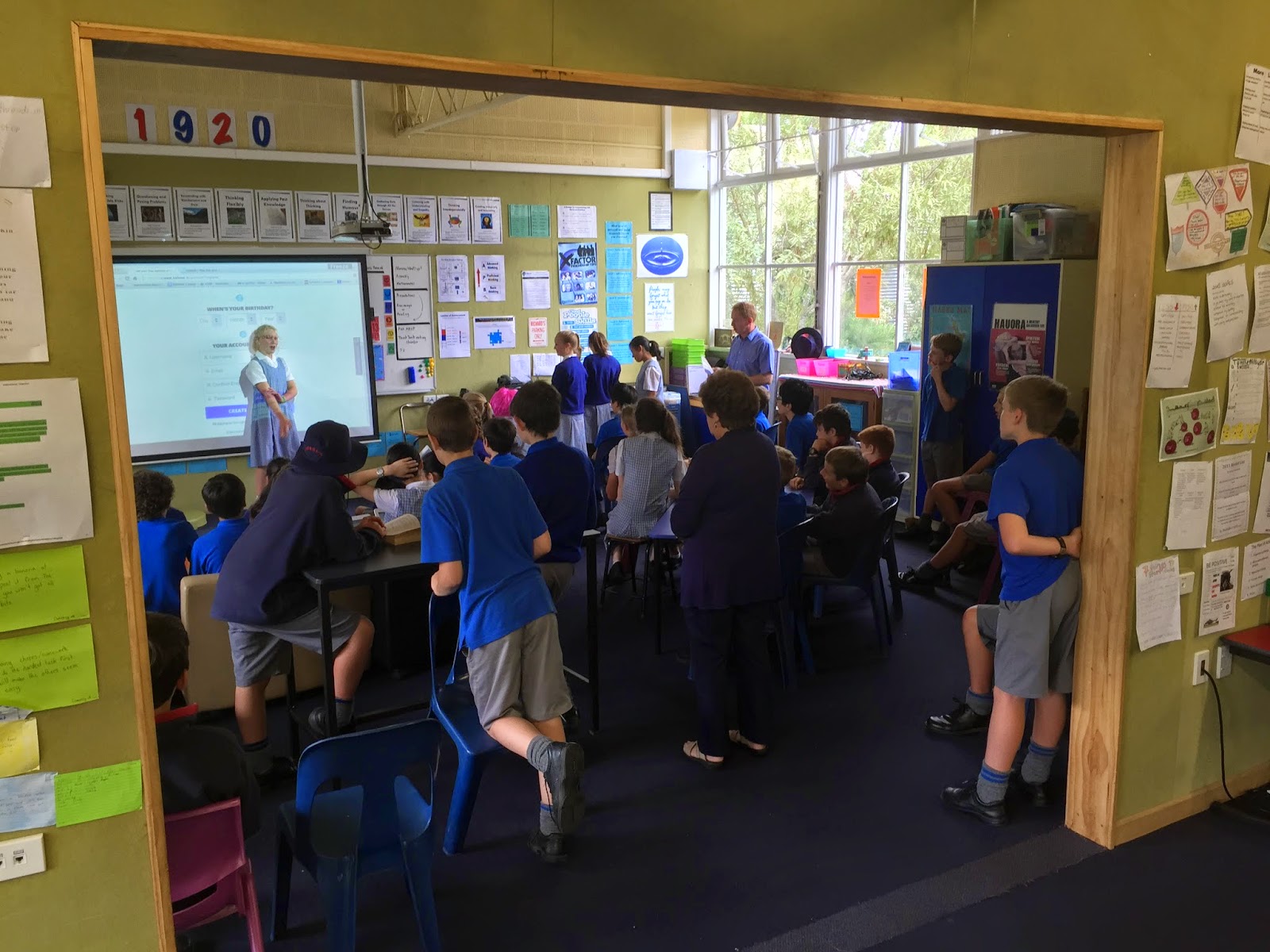
Next term, Cobham Intermediate is going BYOD (bring your own device) school-wide.  We trialled this in several classes last year and many students have already been bringing their devices to school this term but we officially become a BYOD school in Term 2. Yes, 640 odd Intermediate aged students have the right to bring their own digital device to school and use it freely (within reason) to support their learning - what are you thinking right now...chaos, asking for trouble or perhaps feeling jealous that you were schooled a generation too early? I have no doubt many of you will be thinking along the same lines as me, if we are to prepare our kids for their future and equip them with the skills and knowledge they will need for the workforce, then it is inevitable that technology and mobile devices will be part of that very future.


Cobham has done their homework and staff, students and community have had input into the decision as to why moving towards 1:1 mobile devices in the classroom is a beneficial and we believe necessary change to make.  There is plenty of fantastic research, support and advice online and I have learned so much from the Enabling e-Learning site, CORE Educations EdTalk videos and the VLN (virtual learning network) community discussions on BYOD.  Also you should all read this recent blog post by Warren Hall discussing which devices students might find best to support their learning - "Device choice in schools driven by the 'write' things".


A clear and consistent message was how the shift to BYOD needs to be strongly aligned with your schools strategic plan, student achievement goals and school vision.  It cannot be a stand alone initiative introduced solely to ‘Keep up with the Jones’, but rather a well planned and managed move to integrate wider and more effective use of different digital technologies to support and enhance learning, with the ultimate goal of improving student engagement and achievement.  


Creating a BYOD User agreement was done before my arrival but I can only imagine how much time went into creating something so detailed and explicit. All students and parents must sign this to be able to use the various devices at school. I understand the perceived risk schools feel they put themselves at when opening the doors to (possibly) hundreds of different devices being used at school.  This just reinforced the need to put the teaching of appropriate use and digital citizenship at the forefront for our learners, our staff and our whānau.  Cobham has kept our community informed at each stage of our thinking and prototyping and in support of our commitment to digital citizenship, cybersafety and professional development around the appropriate uses of internet capable devices, we have invited all of our parent community to a parents evening in week 1 of T2. We will have 2 guest speakers to discuss ‘Digital Citizenship’ and ‘Keeping our kids safe online’. Firstly, Janelle Riki from CORE Education (South Island Team Leader for Learning with Digital Technologies) will share her expertise and experiences about what digital citizenship is, what kids are doing online, cyberbullying-what it is, where it happens, prevention and what we can do if it occurs, safety tips-how to keep our kids safe online, parental controls, restrictions and how parents can be involved in kids online world e.g. set rules, boundaries, learn the language, having your own online presence. Our second guest speaker will be Senior Constable Richard Brunton, sharing his experiences as a police office and a parent of a Cobham student as to the importance of keeping our kids safe online. Our parents, BoT and wider community are integral to the success of our school going BYOD because our school believes that a positive home-school partnership will benefit all of our learners and that we need to be on the same page as to how to best support our students to appropriately use these devices for learning-at home and at school.


There seems to be a lot of debate and dare I say it, dramatisation, in the media (see here and here for starters) around schools going BYOD but I personally believe we are doing our kids a disservice if we don’t provide an environment where they can choose the right device or tool for each different learning activity.  And yes, sometimes that might just be a pen and paper and sometimes it will be an iPad, a laptop, a camera or a smartphone.  Whatever the tool is, as long as we have kids who are making appropriate choices about how to capture, create, publish and share their learning safely and proudly, then I am all for it!  

But it's not all hearts, flowers and rainbows... there has been a lot of work involved! Three of the biggest issues that we have faced in preparation for BYOD has been around infrastructure, professional development and equity.  But those huge issues are a post all in themselves so I'll tackle them next time...stay tuned!


Friday, February 13, 2015

Passionate prototyping!


Life is busy in a school.  Anyone Everyone in education will be aware of that but slipping back into the fast current of a large busy school is a constant reminder to me that there is no job in education where you are not constantly busy.  It often gets hard to focus on the big picture when we get bogged down in the small details, so often.

We started our first teacher only day this year with our principal @scottthelning sharing the video clip above.  It was a good reminder about the creative journey we at Cobham Intermediate are on in preparation for a complete school re-build in 2016.  Some key phrases immediately jump to the forefront when watching it...designing something requires focus, how do we want people to feel, it takes time, enhances each life it touches.  These are some key drivers that should remain in mind when working through the design process and more importantly, the impact it's all having on our students.

Last year Cobham trialled a collaborative space by knocking out walls, opening/joining up the spaces between 2 old classrooms. This was the first stage of MLE (modern learning environment) prototyping.   The 2 teachers in each of the 2 spaces had the opportunity to re-design their space, creating flexible learning areas to better meet the needs of the students.  Students had input into this process by identifying what furniture they might need and why, where it should go and how the classes could work together and eventually become one.  The teachers went through the same processes in regards to their collegial relationship as well.  It was so successful that all 4 teachers insist that they could no longer go back to teaching independently in a single cell classroom.  They felt the kids were getting a 2 for 1 deal by having access and support to 2 teachers at all times, built close friendships with more students and learned to work and collaborate with all types.  The kids reiterated the same feelings.


So guess what, now we have 4 classroom blocks with holes in the walls.  There has been no compulsory stand on this, no demand from leadership as to everyone must work in a collaborative space and by when.  This has come from teachers identifying that they want to try it, in fact there was even an application process for the teachers as not all classrooms could be converted and there were more who wanted the opportunity to work collaboratively in an open space rather than those who didn't.  These teachers want to take risks, do things differently, have some exciting new learning taking place and to have some epic fails.  Which was awesome because they learned so much from these epic fails and shared this with their colleagues who are dipping their toes into the prototyping pool this year.


I can't wait to see who might put up their hand in the next school holiday block and ask for a chainsaw and some of our amazing builder Dad's to come in and attack their classroom next, if possible!

And to all those out there in the busy education world who are also in the prototyping phase-congratulations on taking the first step! Keep your focus, hang in there it takes time, remember you are trying to enhance each life your teaching touches!

Tuesday, January 13, 2015

It's got to beeeeee PERFECT!


I read an article recently from The Daily Cafe called 'Healthy Striving' which really resonated with me.  As I move closer to the finishing date with CORE Education and my starting day at Cobham Intermediate I have been thinking about the kind of practitioner I am and more importantly, want to be.

I wouldn't call myself a perfectionist but I will admit to taking on an overwhelming amount of tasks in my professional life because I want them done a certain way, in a certain timeframe and if reflecting honestly, I believe I can do the job well and to a high standard.  Arrogance and perfectionism all rolled up in one perhaps?

The statement about how healthy striving asks "How can I improve?" while perfectionism asks "What will people think?" was interesting - do I consciously or unconsciously work a certain way to please others (make them happy, receive praise etc) or rather to improve my practice and become a better educator?  If you are asking yourself that same question right now, I wonder if you came to the same conclusion I did!  It made me a little melancholy too when I went on to read that perhaps "perfectionism not only hampers success, but robs us of pleasure, because we can never measure up to impossible standards".  I agree with this statement and also believe that where there is a culture of perfectionism,  you will usually find a culture of high stress!

So following on from my previous post, how do you decrease workload and stress for teachers?  Obviously, my key learnings from reading the 'Healthy Striving' article is that we shouldn't be aiming for perfection.  We should be constantly working through that process of setting goals, reflecting often, tweaking the failures (often where all the learning happens) and celebrating the successes.  We don't have to live up to the expectations of others and we also shouldn't put those expectations on ourselves.  Let's strive for being perfectly imperfect and know that all our imperfections make us special and unique...just like all those blessed kids in our classrooms!   This will lead us to understanding that we have the power to control our learning, our growth and our teaching.  

Effective teachers don't demand perfectionism from their students all the time, we simply keep asking our kids "How can you improve?"  My challenge to you all, is to make sure that this is your mantra as well!


Monday, December 15, 2014

The first step in an online journey...

I have been in education for 16 years, teaching in the primary sector in and around Christchurch, Westport, and the United Kingdom.  I completed a 3 year Bachelor of Teaching and Learning at the University of Canterbury when I trained back in the late 90s, and also managed to take a years study leave in 2010 to complete a Post Grad Diploma in Education in Te Reo Māori-Hōaka Pounamu and for the last 4 years I have been privileged to work for CORE Education as a National Facilitator, specialising in learning with digital technologies and te reo Māori in English medium schools.

I love being challenged and have a never ending love of learning.  I am passionate about education, in fact never more before than right now.  The catalyst for my passion and drive and re-energised view of what teaching and learning is all about, is the fact that Christchurch is going through massive change & upheaval and I believe it is something to be excited about!  This is partly to do with our city rebuilding itself after our devastating earthquakes but it is also about a shift towards modern teaching and learning practices and pedagogy.

Yes change is hard and it can be scary but it also comes with amazing opportunities to do things differently and hopefully better!  In regards to education, with all the new school re-builds and changes to teaching pedagogy, I think the next few years are going to be phenomenal and I want to be involved as much as possible in walking this journey alongside those at the chalkface, our classroom teachers.  That is why I have accepted the position of Deputy Principal at Cobham Intermediate for 2015 and have decided to blog about my own personal journey.

The purpose of this blog will be to capture my thinking, learning and professional development, alongside my reflections and teacher inquiries while at the same time collecting and collating evidence to go towards to my appraisal against the registered teacher criteria.  I am a firm believer in teachers working smarter, not harder.

As a PD facilitator, I regularly facilitated staff meetings and was always sad to see and hear about the massive workload teachers had - how difficult it was to have anything additional to think about or do and the real issue was that their love for teaching was often getting depleted by the huge amount of pressure and responsibilities they had. I think we need to avoid teacher overload and burnout at all costs if possible.  One small idea that I think can help, is to try the Keep, Kill, Create framework.

'Keep, kill or create' is just my own play on words for this idea but I am certain that there will be a graphic organiser or something more official out there for this concept. You can work through this framework individually or as a team or whole staff.  It is about reflecting on what you are doing and why - what is the purpose of the task, what impact is it having, what are the benefits vs the challenges and then deciding if this is something you should KEEP=continue to do, or to KILL=dump it/stop doing it or to CREATE. Create means that either it needs to be seriously tweaked in its current form or that there is a gap that has been identified and now something needs to be created or done to fill that gap or need.  The idea behind this is that you should ideally reduce your workload by getting rid of things that don't necessarily need to be done or are having limited effect or impact, particularly on student outcomes.  Or if nothing else, just having a really open and honest conversation about what you are doing and why can be the most powerful learning experience in itself!  As teachers we encourage our kids to do things that are meaningful, not just to tick a box - perhaps its time we ourselves started to think outside that box and try to do things differently too!