Showing posts with label PTC6. Show all posts

Thursday, July 20, 2017

Digital apps to support teaching and learning


Even though I have moved back into school life and am no longer a digital technologies advisor, I still have the absolute pleasure of being asked to co-facilitate the Ako Panuku 'Technology for teachers' hui each year with my good friend and co-facilitator Dee Reid.

Naturally at these types of hui, we get asked about what the 'best' apps/websites are for the classroom.  And Dee and I always respond with the same answer - the technology is just a waka/vehicle or tool, you need to firstly understand what you trying to achieve, what is the learning task?

Ako Panuku created this very cool resource for teachers showcasing some possible apps that can be used as the waka/vehicle for different learning tasks e.g. researching, summarising, presenting etc.  This was created in Thinglink - a powerful tool in itself!

https://www.thinglink.com/scene/806367909889703936%20

If you hover over the app, a description will pop up.  You can also hover over the different strategies and get a pop up description and if you click on the down arrow you can even download a word doc copy of the description and step by step how it can be used, including a link to a template.

Ngā mihi nui ki a Ako Panuku!!!

And if those apps don't satisfy your thirst for new and engaging ways to integrate tech tools into your classroom, then I am sure these will...


Wednesday, October 28, 2015

My recommendations for colleagues considering transformation in education

EDEM682 - Transforming Education in Canterbury


The following review is a synthesis of key understandings and learning experiences that have emerged throughout the year that I would recommend to my colleagues considering transformation in education.

Exploring transformation and scoping educational change
Change can be difficult and stressful as it often stems from a ‘shifting context’, where the status quo is no longer the best way forward. For positive and sustainable change to occur, a ‘road map for leading change’ (Jansen, 2015) is important and must start with the why (Sinek, 2009). This not only supports leaders to understand the why but also to consider the key elements that will need to be explored while working through the change process, like the where, how, who and what. Once leaders have this roadmap in place, they can and should share it with all participants to ensure a shared understanding of the context for change and what elements will need to be explored when moving from the business as usual or ‘current state’, to the new business as usual or ‘future state’ (Jansen, 2015).
When scoping for change, the drivers for educational transformation should be identified. These are the things that are pushing or pulling your school towards the need to make changes. I would recommend that all key stakeholders have the opportunity to identify what external factors e.g. the global impact of technology or the identified new skills necessary for the jobs of tomorrow (OECD, 2012) and what internal factors, for example at my school, a whole school re­build due to earthquake damage, are influencing or already changing your educational context. Once these factors have been identified by all key stakeholders, you can then begin to see what potential risks/threats and what potential opportunities there are as a result of these drivers of change in action.

Visioning and systemic thinking in strategic planning
Strategic thinking must be systemic, in that we need to be able to see the big picture before we can understand the parts within it. To be able to make considerate and effective decisions around whole school change, understanding the whole comes before understanding the parts but the key element is actually in the interaction. If we do not consider the way in which decisions or change in one area can impact on another, we can be left with ‘unintended consequences’. An example of this could be where a school decides to change the hours of instruction, starting and finishing earlier in the day. This is based on good research that children will learn better in those hours but the unintended consequences could be huge e.g. increase of parents in need of after school childcare or out of sync timetables for siblings at different schools. I would recommend using key questions, relevant to your context, to create conversations and a shared understanding of the bigger picture, the parts within it and how the interact or influence each other. These questions could be used as a framework when working with staff, leaders, governance, whānau and students, “what does a successful school look like?” and “what are the factors that contribute to this and how do they influence each other?” Another reputable change model I would recommend schools research and apply to their own context by having staff collaboratively map out the change arena applied to their kura, would be Davis’ ‘Arena of Change’ (2008), a model that applies an ecological perspective to understand how teacher learning may be promoted for educational renewal, and clearly identifies that “teachers are the keystone speciesin the education ecologies of the twenty-­first century world”.

Pedagogical shifts
Successful change to better meet the needs of modern learners in today's and tomorrow's schools will require some dramatic shifts to traditional methods and practice of teaching. ‘New pedagogies’ (Fullan & Langworthy, 2014) will present plenty of challenges but excitingly, lots of opportunities to better engage and prepare our students for a world that requires people with inquiry and problem solving skills, who can effectively collaborate, innovate, create and communicate and who are culturally responsive, digitally literate and globally aware. Derek Wenmoth (2013) from CORE Education talks about the drivers for change being agency, connectedness and ubiquity and these are driving some of the pedagogical changes that need to occur so that schools become an environment that values and fosters student agency, collaboration, co­-teaching, self regulated and personalised learning. I would recommend that when schools are considering pedagogical shifts, they need to begin with their students ­ what do they need to know, understand and do to be successful? Secondly ­ what does our learning practices and environments need to look like to accomplish this? Finally ­ how will we know what impact this is having on student engagement, enjoyment and achievement?

Community, whānau and iwi engagement
When considering transforming education in your school context, it is imperative that all members of your school community are included on this journey and can participate in the decision making process ­ he waka eke noa:a canoe on which everyone can embark. One of the first steps needs to be identifying all key stakeholders ­ students, whānau, staff and Board of Trustees. As I identified earlier in the scoping process, it would also be recommendable to reach further abroad and look for other potential partners that could bring added value and richness to the transformation and future of the school through ‘civic engagement ­ the action through which citizens join in new conversations that have the capacity to alter the future, for example, libraries, community services­health, police, social services, local community businesses or other educational institutions e.g. Polytechnic or Universities.

Iwi engagement is also critical for all New Zealand educational settings. We know that traditionally we have not met the needs of many of our priority learners, specifically Māori and Pasifika tamariki and their whānau (MoE, 2013). Culturally responsive practices embedded into the culture of our schools will ensure that schools are upholding their obligations under the Treaty of Waitangi (1840) and are providing educational experiences that are authentic, meaningful and relevant for all learners, that build on their prior knowledge and cultural connections and acknowledges and celebrates diversity and the potential each child has within them to succeed. I would recommend that schools reach out to iwi and build a reciprocal and meaningful relationship with them. You will need their input and guidance around what culturally responsive practices should be normalised in your school setting and perhaps even establishing a ‘cultural narrative’ for your school, where schools can ensure design and practice will reflect the rich history of your local iwi and whenua. More importantly, schools need to address will be their tamariki, whānau and staff can support the iwi. A reciprocal relationship built on respect and ongoing support for each other will reap rewards for all and ensure the vision for Ka Hikitia (2013) of ‘Māori enjoying educational success as Māori’ becomes a reality in your kura.


References
Davis, N.E. (2008). How may teacher learning be promoted for educational renewal with IT? In J. Voogt & G. Knezek (eds.), International Handbook of Information Technology in Primary and Secondary Education, (507­520) Amsterdam: Springer

Fullan, M., & Langworthy. (2014).​​A Rich Seam: How new pedagogies find deep learning. Retrieved from http://www.michaelfullan.ca/wp­content/uploads/2014/01/3897.Rich_Seam_web.pdf

Jansen, C. (2015). Road map for change: presentation at lecture #1 of EDEM630 course. University of Canterbury.

Ministry of Education. (2013). Ka Hikitia­Accelerating Success 2013­2017.Wellington, New Zealand:Learning Media.

OECD (2012). Education Today 2013: The OECD Perspective. Retrieved from
http://abdigm.meb.gov.tr/meb_iys_dosyalar/2013_12/20023619_educationtoday2013the oecdperspective.pdf

Sinek, S. (2009). Start with Why: How great leaders inspire everyone to take action.New York: Portfolio.

Te Tiriti o Waitangi (1840)

Wenmoth, D., (2012) EdTalks; Ubiquity, agency and connectedness. Retreived from
http://edtalks.org/video/ubiquity­agency­and­connectedness 

Tuesday, July 7, 2015

Flippin' awesome teaching for a new generation


Yesterday I attended the Burnside Learning Community Cluster un-conference. Held on the first day of the holidays, many teachers and support staff came together from almost all of the early childhood, primary and secondary schools in our cluster to network, share ideas and to learn.

The keynote by Dr Cheryl Doig from Think Beyond was called 'Into the Future' and raised some excellent points about the changes education is facing. I went on to several different breakouts afterwards but one particularly grabbed my attention. I went to see a secondary science teacher, @mattynicoll and his breakout called 'Rewind Learning' (see the video above of another time he has shared this presentation online).

I have been interested in flipped learning for a few years now but I was excited to see and hear examples in my own backyard. I first heard about a teacher at Breens Intermediate doing some cool things, just starting off by recording himself & posting it to his YouTube channel https://www.youtube.com/user/mrmteacherbreens.

This is exactly how Matt described his beginning too and that he just had to push past the fear of looking/sounding silly and embrace the possibilities that posting learning activities online would offer his students. Allowing kids to watch the video at their own pace, watch it after school hours, rewind and watch over and over, watch it before or after the actual physical lesson at school and to share it with others who might also have an interest in it and could work together with you on the concept is just a few of the awesome benefits to recording and sharing lesson content online. Matt's YouTube channel is also an awesome resource https://www.youtube.com/user/mattynicoll and its very cool to see just how well the lesson have developed and grown in quality and confidence!

The concept of flipping the classroom sounds time consuming and challenging at its most complex but what I got from listening to Matt share his experiences, is that you can take it at your own pace, to a level that you are comfortable with. All you have to do is give it a go, try something new, be innovative, take risks, step outside your comfort zone...you know, all the stuff we ask our students to do!

But don't take my word for it, I am by no means an expert. If it's an experts opinion you are after though, perhaps take a listen to this guy, one of my all time favs!


Michael Fullan: Technology, the new pedagogy and flipped teaching


Wednesday, March 25, 2015

“They said the classroom was a BYOD”


I hope all you Kiwi's out there were singing along when you read the title of this post... it is in homage to the great Billy T James’ skit/waiata “They said the party was a BYOG” to the tune (of course) of YMCA.  Every time I say BYOD I can’t help but think of that skit.  And boy have I been thinking and saying it a lot lately!


Next term, Cobham Intermediate is going BYOD (bring your own device) school-wide.  We trialled this in several classes last year and many students have already been bringing their devices to school this term but we officially become a BYOD school in Term 2. Yes, 640 odd Intermediate aged students have the right to bring their own digital device to school and use it freely (within reason) to support their learning - what are you thinking right now...chaos, asking for trouble or perhaps feeling jealous that you were schooled a generation too early? I have no doubt many of you will be thinking along the same lines as me, if we are to prepare our kids for their future and equip them with the skills and knowledge they will need for the workforce, then it is inevitable that technology and mobile devices will be part of that very future.


Cobham has done their homework and staff, students and community have had input into the decision as to why moving towards 1:1 mobile devices in the classroom is a beneficial and we believe necessary change to make.  There is plenty of fantastic research, support and advice online and I have learned so much from the Enabling e-Learning site, CORE Educations EdTalk videos and the VLN (virtual learning network) community discussions on BYOD.  Also you should all read this recent blog post by Warren Hall discussing which devices students might find best to support their learning - "Device choice in schools driven by the 'write' things".


A clear and consistent message was how the shift to BYOD needs to be strongly aligned with your schools strategic plan, student achievement goals and school vision.  It cannot be a stand alone initiative introduced solely to ‘Keep up with the Jones’, but rather a well planned and managed move to integrate wider and more effective use of different digital technologies to support and enhance learning, with the ultimate goal of improving student engagement and achievement.  


Creating a BYOD User agreement was done before my arrival but I can only imagine how much time went into creating something so detailed and explicit. All students and parents must sign this to be able to use the various devices at school. I understand the perceived risk schools feel they put themselves at when opening the doors to (possibly) hundreds of different devices being used at school.  This just reinforced the need to put the teaching of appropriate use and digital citizenship at the forefront for our learners, our staff and our whānau.  Cobham has kept our community informed at each stage of our thinking and prototyping and in support of our commitment to digital citizenship, cybersafety and professional development around the appropriate uses of internet capable devices, we have invited all of our parent community to a parents evening in week 1 of T2. We will have 2 guest speakers to discuss ‘Digital Citizenship’ and ‘Keeping our kids safe online’. Firstly, Janelle Riki from CORE Education (South Island Team Leader for Learning with Digital Technologies) will share her expertise and experiences about what digital citizenship is, what kids are doing online, cyberbullying-what it is, where it happens, prevention and what we can do if it occurs, safety tips-how to keep our kids safe online, parental controls, restrictions and how parents can be involved in kids online world e.g. set rules, boundaries, learn the language, having your own online presence. Our second guest speaker will be Senior Constable Richard Brunton, sharing his experiences as a police office and a parent of a Cobham student as to the importance of keeping our kids safe online. Our parents, BoT and wider community are integral to the success of our school going BYOD because our school believes that a positive home-school partnership will benefit all of our learners and that we need to be on the same page as to how to best support our students to appropriately use these devices for learning-at home and at school.


There seems to be a lot of debate and dare I say it, dramatisation, in the media (see here and here for starters) around schools going BYOD but I personally believe we are doing our kids a disservice if we don’t provide an environment where they can choose the right device or tool for each different learning activity.  And yes, sometimes that might just be a pen and paper and sometimes it will be an iPad, a laptop, a camera or a smartphone.  Whatever the tool is, as long as we have kids who are making appropriate choices about how to capture, create, publish and share their learning safely and proudly, then I am all for it!  

But it's not all hearts, flowers and rainbows... there has been a lot of work involved! Three of the biggest issues that we have faced in preparation for BYOD has been around infrastructure, professional development and equity.  But those huge issues are a post all in themselves so I'll tackle them next time...stay tuned!


Friday, February 13, 2015

Passionate prototyping!


Life is busy in a school.  Anyone Everyone in education will be aware of that but slipping back into the fast current of a large busy school is a constant reminder to me that there is no job in education where you are not constantly busy.  It often gets hard to focus on the big picture when we get bogged down in the small details, so often.

We started our first teacher only day this year with our principal @scottthelning sharing the video clip above.  It was a good reminder about the creative journey we at Cobham Intermediate are on in preparation for a complete school re-build in 2016.  Some key phrases immediately jump to the forefront when watching it...designing something requires focus, how do we want people to feel, it takes time, enhances each life it touches.  These are some key drivers that should remain in mind when working through the design process and more importantly, the impact it's all having on our students.

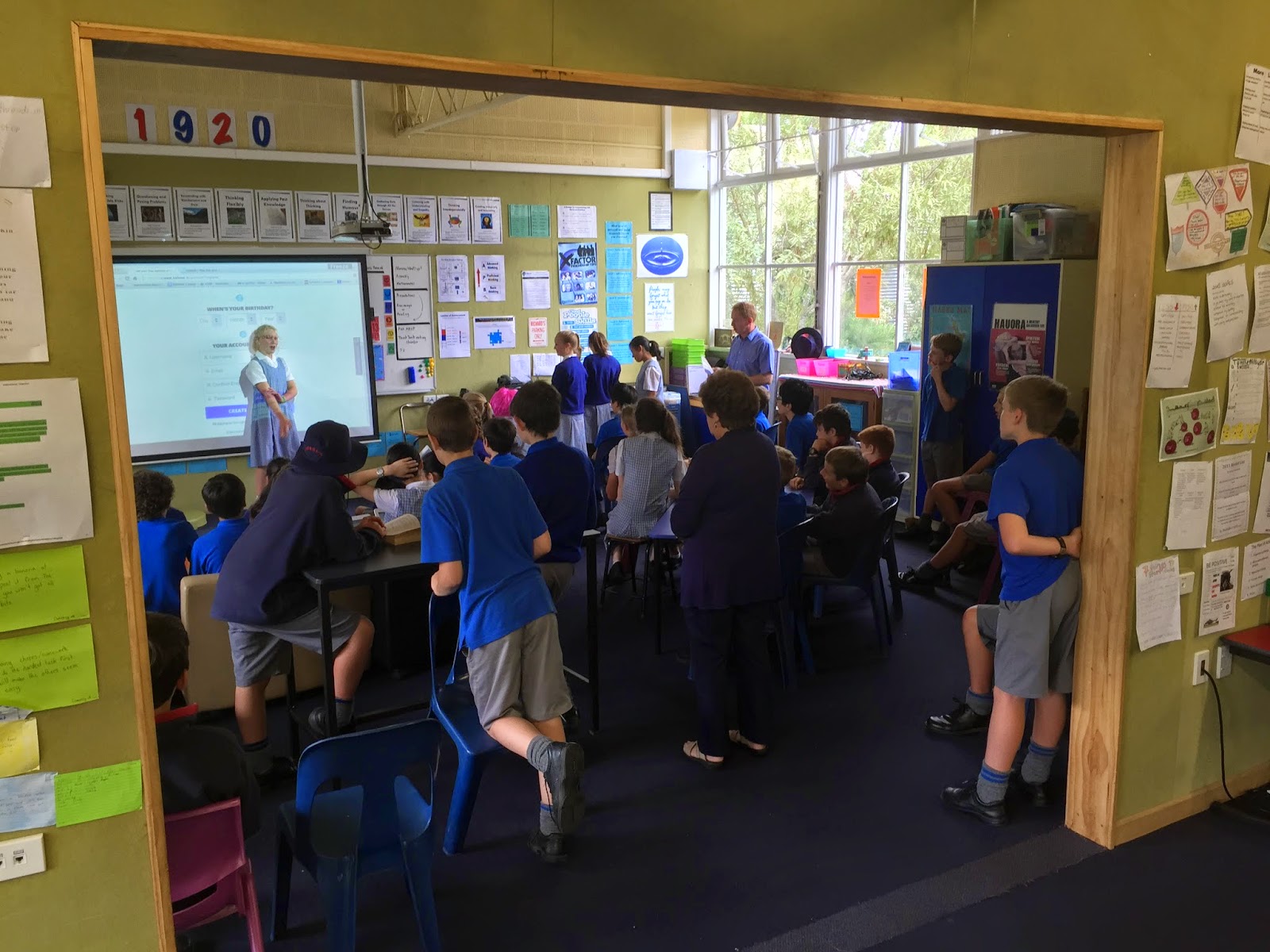
Last year Cobham trialled a collaborative space by knocking out walls, opening/joining up the spaces between 2 old classrooms. This was the first stage of MLE (modern learning environment) prototyping.   The 2 teachers in each of the 2 spaces had the opportunity to re-design their space, creating flexible learning areas to better meet the needs of the students.  Students had input into this process by identifying what furniture they might need and why, where it should go and how the classes could work together and eventually become one.  The teachers went through the same processes in regards to their collegial relationship as well.  It was so successful that all 4 teachers insist that they could no longer go back to teaching independently in a single cell classroom.  They felt the kids were getting a 2 for 1 deal by having access and support to 2 teachers at all times, built close friendships with more students and learned to work and collaborate with all types.  The kids reiterated the same feelings.


So guess what, now we have 4 classroom blocks with holes in the walls.  There has been no compulsory stand on this, no demand from leadership as to everyone must work in a collaborative space and by when.  This has come from teachers identifying that they want to try it, in fact there was even an application process for the teachers as not all classrooms could be converted and there were more who wanted the opportunity to work collaboratively in an open space rather than those who didn't.  These teachers want to take risks, do things differently, have some exciting new learning taking place and to have some epic fails.  Which was awesome because they learned so much from these epic fails and shared this with their colleagues who are dipping their toes into the prototyping pool this year.


I can't wait to see who might put up their hand in the next school holiday block and ask for a chainsaw and some of our amazing builder Dad's to come in and attack their classroom next, if possible!

And to all those out there in the busy education world who are also in the prototyping phase-congratulations on taking the first step! Keep your focus, hang in there it takes time, remember you are trying to enhance each life your teaching touches!