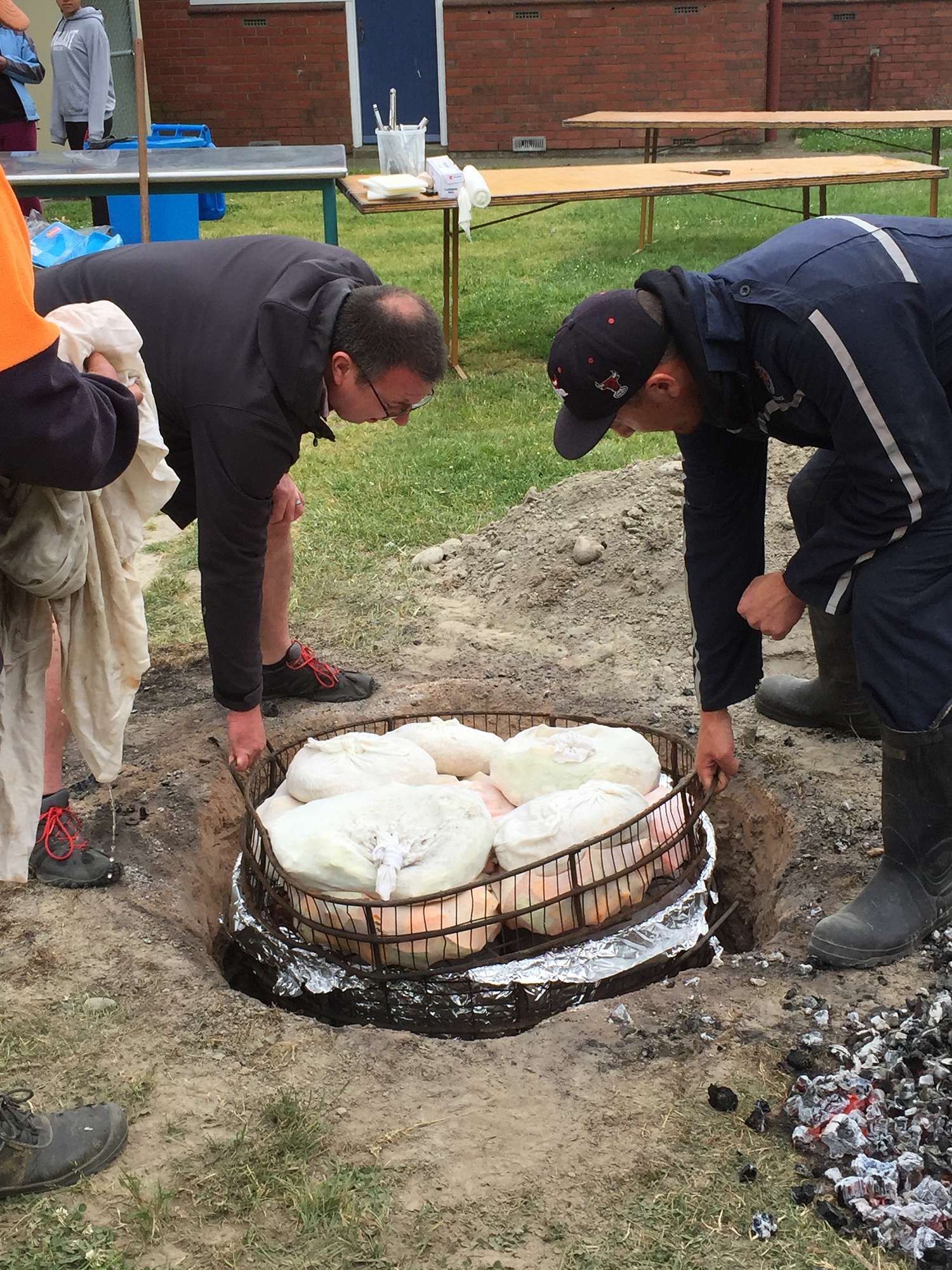
Cobham staff, students, whānau and community members enjoyed a delicious hangi lunch together last Thursday.


 As part of our commitment to increased and improved communication with our Māori community, this year at Cobham Intermediate, we have created 'Pānui Ako', a term report sent out to all of our parents via the school newsletter and our Facebook page and emailed directly to all Māori whānau. We also send copies to all school whanaunga e.g. Burnside Primary, our MoE Senior Advisor, BoT, our local hapū-Ngāi Tūāhuriri, our cluster co-ordinator and other members of our wider school community.
 When I think of what Māori enjoying educational success as Māori means to me, I think of the needs of Māori learners being met on every level. Academically they are achieving to the best of their ability, socially they are connected and confident, their mana and wairua are strong and their potential is recognised and celebrated. Their language, culture and identity is something to be proud of and the school celebrates and promotes this. It should be cool to be Māori and our Māori kids know it, feel it and own it - our teaching and learning programmes are tailored to their strengths and interests and support is in place when and where needed. Māori preferred learning styles are identified and teachers' practice strategies that engage Māori best. What do you think it means? Have you ever asked your staff and unpacked what it means to them, what is happening in your school currently and what you may need to improve on? Have you ever asked whānau and iwi what this actually means to them?
 The school had identified meeting the needs of Māori as one of our key priorities this year, so we have dedicated the whole of Term 2 to this kaupapa. One of the first places I wanted to start is with our key stakeholders and most importantly, our whānau and iwi. There had not been a whānau consultation hui at our school for several years. This is where I wanted to start and being an intermediate, you cant afford to muck around, as we lose 50% of our student population every year. So a whānau hui was planned to ask our whānau the following key questions and get their feedback, which was amazing. We had a great turn out and here are some of my tips for ensuring a successful hui:

 All of the parents and teachers who attended our hui had a fantastic time and were really enthused about what we could be doing for our tamariki. We have now developed a whānau advisory group with Māori parents and tamariki. They will meet with me once a term to firstly design an action plan, and then implement it, a step by step plan of how we will bring their aspirations to life.
 Also during this term, my principal and I met with a representative from the education branch of Ngāi Tūāhuriri. Ngāi Tūāhuriri, of Ngāi Tahu descent, are our closest hapū, who have mana whenua of this takiwa. Our school is very keen to build a reciprocal and close relationship to our local hapū and so meeting with them was our first step. We are sending most of our staff to a professional development day in the school holidays at their marae Maahunui II, in Tuahiwi, to learn about Ngāi Tahu history and Ngāi Tūāhuriri tikanga and protocols. It is important to us that we uphold the tikanga of our hapū and that our Māori learners are connected to the history, people and land where their school and home is located first and foremost, whether they are of Ngāi Tahu descent or from other iwi. We intend to progress and develop our ongoing relationship with Ngāi Tūāhuriri by implementing some of the following ideas if possible:
 So with whānau and iwi relationships being developed, it was important to hear from staff and students at school. This term, all staff PD has been planned around meeting the needs of our priority learners, in particularly Māori and as part of how we can best meet their needs, culturally responsive practice is also a main focus. We began the term looking at what does the MoE mean by priority learners, who are our priority learners at school and what do we know about them. We developed a google spreadsheet with all information and data collected about all of our priority learners right across the school. This information includes national standards and OTJs but more importantly it includes information about home life, strengths, interests, iwi links, languages, support agencies, behaviour etc etc. It is a holistic view of each child, shared with every member of the staff so at any time, all of us can read and add to the bigger picture of who this child really is. This information is also used to support teacher inquiries into how we are meeting the needs of these learners. The following week we were extremely fortunate to have Dr's Angus and Sonja MacFarlane present to our staff about cultural responsive practice and what this could look like in a school working with Māori learners and whānau. This workshop was opened up to all schools and staff from our learning community cluster as it is such an important kaupapa and it was such an honour to have them work with us that it made sense to offer this opportunity to as many kaiako as possible!